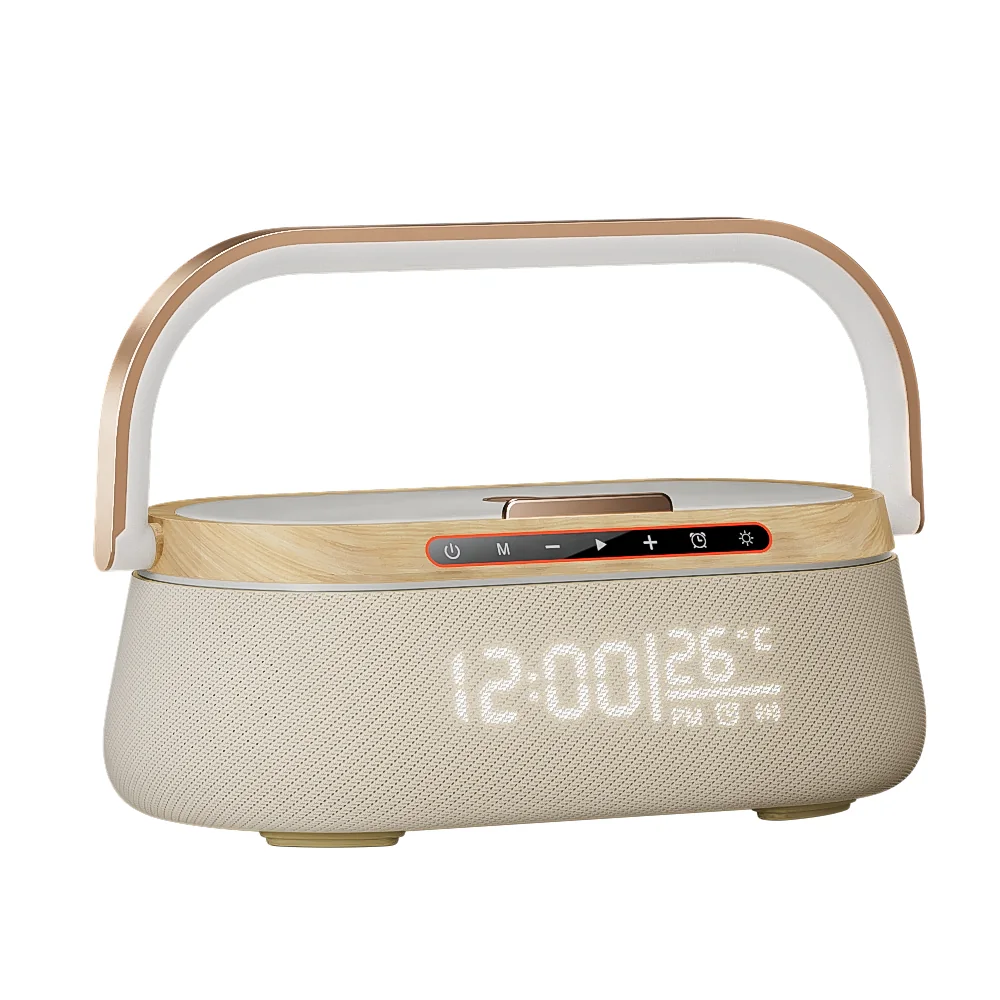
A useful Bluetooth speaker quotation begins with a defined product, not a request for the lowest possible minimum order quantity. Two speakers that look similar can require different batteries, drivers, housings, decoration methods and packaging. Those choices affect both the order threshold and the final unit cost.
Huazeng's Bluetooth speaker range includes compact portable models, RGB-light speakers, soundbars, wireless-charging designs and app-controlled display products. This guide explains which details to settle before asking for an OEM or private label quote.
Why there is no single Bluetooth speaker MOQ
MOQ is tied to the selected model and configuration. A standard model in an available color with a simple logo may follow one commercial threshold. A custom housing color, revised firmware, printed gift box or special accessory set can create separate minimums for materials, decoration and packaging. Combining all of those into one number before the brief is clear produces a quote that is difficult to compare.
Ask for the MOQ against a named model and an exact scope. If the project has several quantity scenarios, request separate quotations for each scenario instead of asking the supplier to guess which one will be ordered.
Start with the product platform
Choose the speaker format according to the customer and sales channel. A compact travel speaker, a party speaker and a bedside charging speaker have different cost structures and packaging needs. Build a shortlist of two or three models before discussing decoration.
For example, the HZ-B275 combines audio and wireless phone charging. Its sample review must cover both functions and their simultaneous operation. The HZ-B313 adds app control, TWS, lighting and a time display. That feature set creates a different approval workload from a basic portable speaker.
Separate product cost from project cost
The quoted unit price normally reflects the agreed hardware configuration. A private label project can also involve setup work or one-time items such as logo tooling, color matching, packaging artwork, samples and destination-specific testing. Ask the quotation to identify recurring unit items and one-time project items separately.
This distinction matters when comparing two suppliers. A lower unit price can hide missing packaging, accessories or approval work. A higher first-order total may include items that do not repeat on later orders. Compare the same scope, currency, trade term and quantity.
Branding choices that can change the quote
Send vector logo artwork, the intended print size, color reference and preferred position. The available decoration method depends on the surface. Printing on a flat plastic area is different from applying a mark to fabric, a grille or a curved housing.
Custom color should be treated as a product decision, not merely an artwork note. Different materials can show the same color reference differently. Ask how the color will be approved and whether a physical sample or signed color chip becomes the reference.
Packaging can set its own minimum
A neutral box with a label, a printed color box and a gift package do not have the same setup or production requirements. State the box style, languages, barcode, warning labels, manual, accessory list and carton marks. If packaging quantities differ from the product quantity, ask how unused materials will be handled.
Finalize feature wording after the product configuration is stable. Bluetooth version, output, battery statement, charging input, supported playback modes and included accessories should match across the sample, manual, label and box.
Testing and market documentation belong in the RFQ
The destination market and radio configuration affect the documentation discussion. Do not assume that a report for one model or configuration covers another. Include the country, sales channel and any retailer documentation checklist in the first request.
Bluetooth qualification, radio approval, battery transport documents and product safety files involve different purposes. The required set depends on the finished product and market. Our consumer electronics compliance document guide shows how to organize this part of the project without mixing unrelated files.
Use a comparable Bluetooth speaker RFQ
- speaker model numbers or required format;
- target country, customer and sales channel;
- quantity scenarios for the first and repeat order;
- required audio, lighting, charging or app functions;
- logo file, color and finish direction;
- packaging format, languages and barcode needs;
- accessories and manual requirements;
- sample deadline and intended launch date.
Send the same version of this brief to every candidate. When an item remains open, mark it as an option rather than allowing each quotation to make a different assumption.
Need a model-specific MOQ and quotation?
Share your target market, preferred speaker format, quantity and branding requirements. Huazeng can identify relevant models and confirm which inputs still affect the commercial scope.
Request a Speaker QuoteFrequently asked questions
Can I get one MOQ for every Bluetooth speaker?
No single threshold applies to every model and configuration. Ask for the MOQ tied to the named model, color, branding and packaging scope.
Does adding a logo always change the MOQ?
It depends on the model, decoration method and surface. Provide the artwork and intended position so the available method can be confirmed.
Why should packaging be quoted separately?
Printed packaging can have its own setup, material and quantity requirements. Separating it makes supplier comparisons clearer.
What is the fastest way to receive a useful quote?
Send model numbers, target market, quantity, must-have functions, branding files, packaging direction and timing in one brief.