Portable fans look simple until a buyer has to choose the right format, battery, control method and packaging promise for a real sales channel. A clear brief helps you compare models quickly and prevents a sample from becoming an expensive guessing exercise.
Huazeng’s portable fan range includes desk, handheld, neck-worn and clip-on formats. Use the checklist below to create a shortlist that matches your market rather than selecting only by appearance.
1. Start with the placement
Choose the primary use before you compare specifications. A desk fan needs stable placement, a useful airflow direction and controls that are easy to reach. A stroller or clip-on fan needs a secure attachment point and a compact profile. A handheld or neck fan needs comfortable weight distribution and an intuitive speed control.
Write one sentence describing the use case: “quiet office cooling,” “stroller cooling for travel,” or “USB rechargeable personal fan for summer gifting.” That sentence will guide every later decision.
2. Compare airflow and control logic
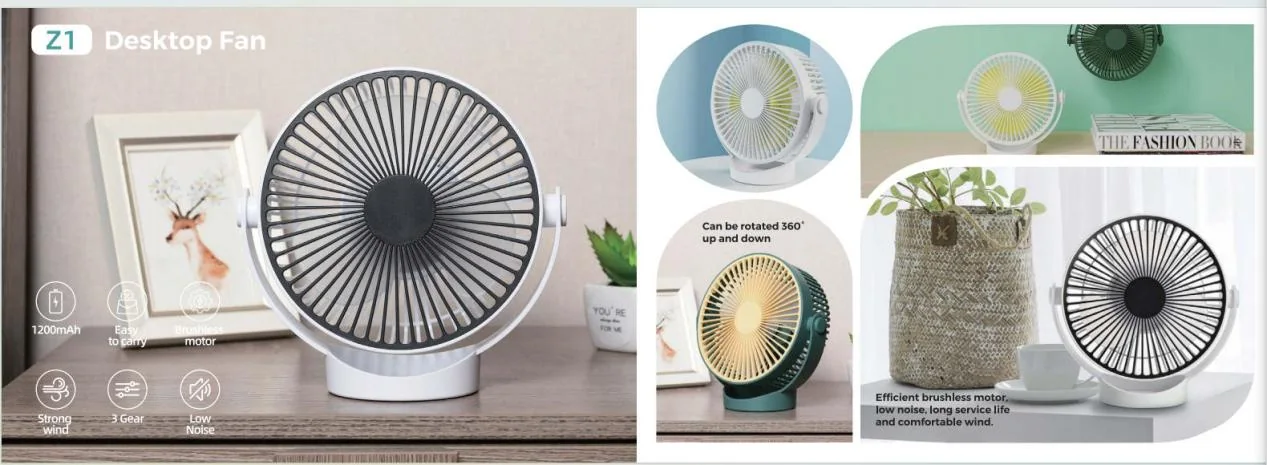
Look beyond the number of speed settings. Check how the fan moves between speeds, whether the control remembers the last setting, and whether the head oscillates or tilts. If the range includes a quiet USB fan, listen at the lowest speed in the room where it will be used. For a desktop fan such as HZ-Z1, placement and direction are part of the product experience, not just a line in the specification table.
3. Match battery and charging to the channel
Rechargeable models need a repeatable runtime scenario. Define the speed, lighting state and charging method you will use for the test. Record the start time, low-battery behavior and charging indicator. If your channel expects USB-C, make that a brief requirement from the beginning instead of a late packaging change.
For a model that combines a base and clip, such as HZ-Z11, test both placements. A fan can perform well on a desk yet feel unstable when clipped to a stroller or shelf.
4. Build a small safety and usability list
Check the grille, clip strength, cable access, button labels and moving parts. Operate the product repeatedly and look for pinching points, rattles or sharp edges. Confirm that the manual and packaging describe the same charging input, speed control and included accessories.
5. Define the retail promise
Decide what the front of the package should communicate: quiet comfort, portability, long battery life, stroller use, desk use or multi-position flexibility. One product rarely owns every benefit. A focused promise makes the model easier to merchandise and the listing easier to write.
6. Send a useful RFQ brief
When you request a quote, include target country, sales channel, estimated quantity, preferred format, battery expectations, logo position, packaging direction and launch timing. Start with the OEM/ODM process or send Huazeng your product brief. We can focus the conversation on the models and configuration questions that fit your market.
Frequently asked questions
What is the best portable fan format for an office?
A desk or table fan is usually easiest to position and share. Prioritize stable placement, controllable airflow and a sound profile that suits the room.
Should I choose a rechargeable or USB-powered fan?
Choose based on where the product will be used. Rechargeable models support mobility; USB-powered models suit desks and workspaces with a nearby power source.
What should I test on a clip-on fan?
Test the clip on each intended surface, check stability during operation and confirm that the fan head remains easy to aim after attachment.