A polished sample can still hide expensive questions. The real job is not to decide whether a Bluetooth speaker sounds “good” during a five-minute demo. It is to check whether the sample matches your brief, works consistently across the functions you plan to sell, and gives your team enough evidence to approve the next step.
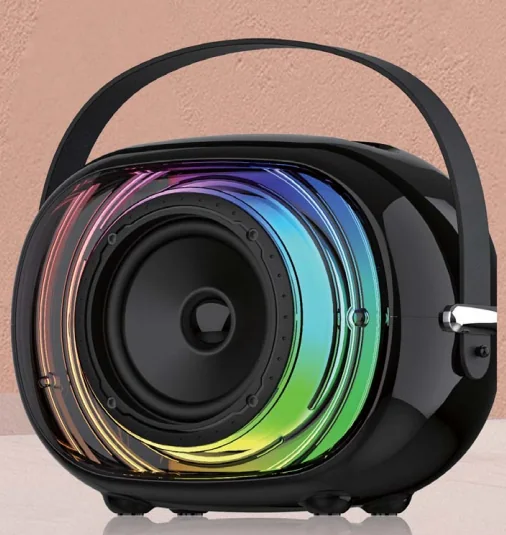
At Huazeng Technology, our Bluetooth speaker range includes compact portable models, RGB-light speakers, wireless-charging designs, pixel-art displays and soundbars. Those products do not share one universal inspection plan. A useful sample review starts with the exact model, feature set and target market.
1. Freeze the sample configuration first
Write down the sample’s model number, Bluetooth version, output power, battery capacity, charging input, included accessories, color and firmware or app version where relevant. Photograph the product label and packaging label. If two samples look alike but use different batteries, drivers or firmware, their results are not directly comparable.
2. Run a controlled sound check
Use the same audio files, source device, connection mode, listening position and volume points for every candidate. Include speech, bass-heavy music and a track with detailed high-frequency content. Listen at low, medium and near-maximum volume.
Do not judge loudness alone. Check speech clarity, bass control, distortion, cabinet vibration and left-right balance on stereo models. Note whether the sound changes sharply near maximum volume. If your product brief prioritizes deep bass, define what that means for your market—perceived weight at moderate volume, maximum sound pressure, or low-frequency extension—so the next sample revision has a clear target.
3. Test pairing and reconnection
Pair the speaker with at least two common phone platforms used in your target market. Then power the speaker off, move out of range, return, and check reconnection. Delete the pairing record and repeat a first-time setup. If the model supports hands-free calling, TWS pairing, USB, AUX or TF card playback, treat each input as a separate test case.
Record connection time, control behavior and any spoken prompts. Voice prompts, volume curves and default light modes can affect the retail experience even when the core audio circuit works correctly.
4. Verify every advertised function
A multifunction speaker needs a function matrix, not one general “works” box. For an RGB-light model, check mode selection, brightness, synchronization and whether lights can be disabled. For a display or app-controlled model, review pairing, time setting, saved settings and behavior after a power cycle.
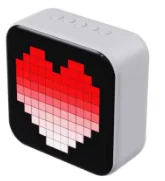
Our HZ-B313 pixel-art speaker, for example, combines app control, TWS, RGB lighting and a time display. Each feature creates its own approval question. A buyer who plans to promote the display should spend more sample time on app stability and saved content than a buyer who only needs background lighting.
5. Measure battery and charging behavior
Battery runtime depends on volume, light use, connection mode and test conditions. Define one repeatable scenario, such as continuous playback at a fixed volume with lights on or off. Record start time, shutdown time and any low-battery warnings. Repeat the test if the result will become a prominent marketing claim.
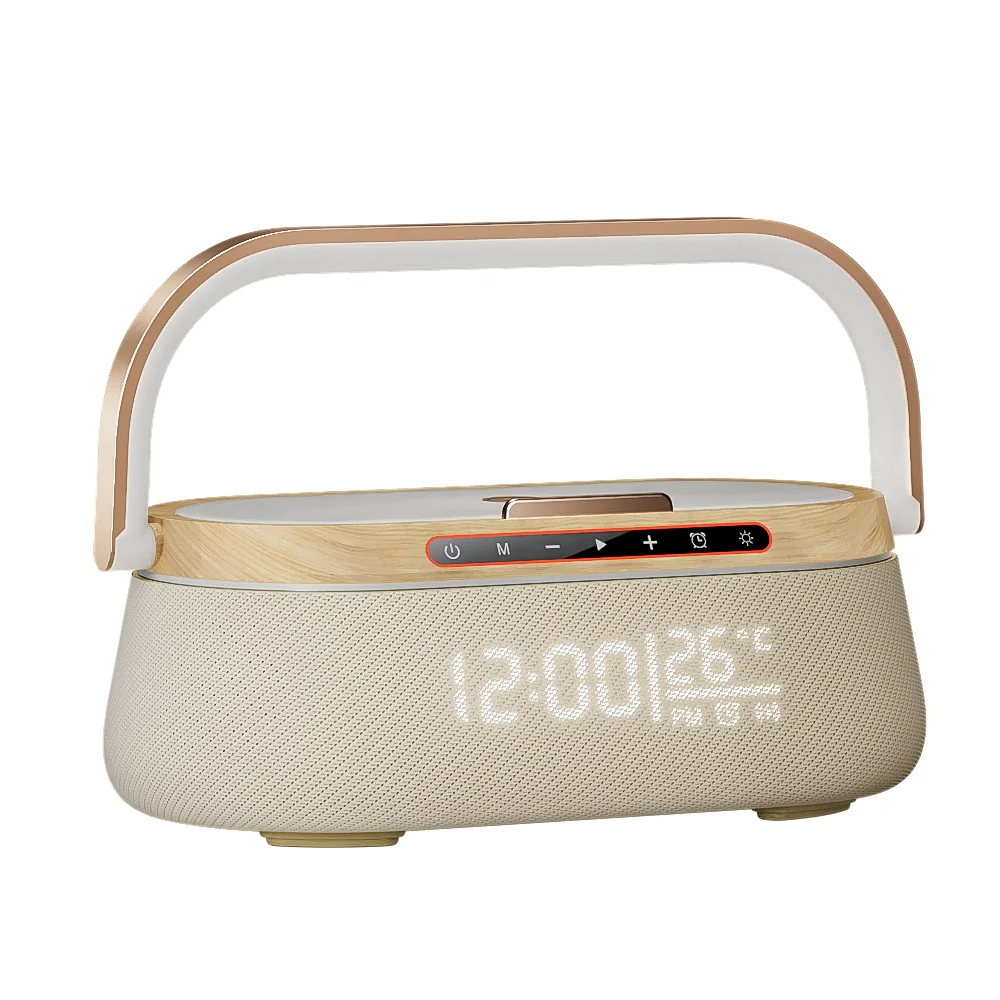
Check charging with the intended cable and power source. Confirm indicator behavior, charging time and whether the speaker can play while charging if that matters to the user case. On a combination product such as the HZ-B275 speaker with 15W wireless charging, test audio playback and phone charging separately, then together. Watch for excess heat, unstable charging or a user interface that becomes confusing when both functions are active.
6. Inspect mechanics, controls and finish
Check gaps, seams, grille alignment, button feel, port access, feet, handles and moving parts. Place the unit on a hard surface and listen for rattles. Look at the product under neutral light for inconsistent color, scratches, sink marks, glue residue or printing defects.
Operate each button repeatedly and verify that icons match the actual function. A small labeling mistake can spread into the manual, color box and online listing, so resolve it before packaging files are finalized.
7. Compare the sample with the packaging promise
Every printed claim should map to an observed function or an approved document. Compare the model number, Bluetooth version, rated power, battery statement, charging input, included accessories, dimensions and feature icons across the product, manual and box artwork. Remove ambiguous claims rather than hoping the end customer interprets them correctly.
8. Separate product performance from market compliance
A good functional sample is not the same as a market-ready product. The required compliance path depends on the destination, radio design and finished configuration. The Bluetooth SIG states that Bluetooth products must complete its Qualification Process before sale or distribution, and that each member company completes qualification for its own product. Review the current Bluetooth qualification guidance while the commercial configuration is still being defined.
For the United States, radio-frequency devices may be subject to FCC equipment authorization requirements. For the European Economic Area, radio equipment must follow the applicable conformity-assessment route before CE marking. Use the current FCC equipment authorization guidance and the European Commission’s Radio Equipment Directive information with your compliance specialist. Do not copy a certificate claim from another model onto your artwork.
9. Record changes in a golden-sample log
When you request a revision, identify the current sample, the exact change and the acceptance method. “Improve sound” is not a testable instruction. “Reduce cabinet vibration on the bass test track at the agreed volume point” is clearer. Number each revision and keep photos, test notes and artwork files together.
Once the configuration is approved, state which physical unit and document set form the reference for later production checks. This avoids a familiar problem: the approved audio sample, approved color chip and approved packaging file come from different dates with no clear link between them.
10. Finish with a commercial readiness review
Before you approve the project, list every open commercial input: target quantity, color split, branding position, packaging format, accessories, documentation, shipment timing and destination. Ask for model-specific answers rather than assuming one MOQ or lead time applies to every speaker.
Send Huazeng the model numbers you are comparing, your target market and the functions that matter most. We can use those inputs to focus the discussion around the relevant products and prepare the next sample or quotation step. Start with our OEM/ODM sourcing process or send a product inquiry.
Frequently asked questions
How many OEM Bluetooth speaker samples should I test?
Test enough units to separate a one-off defect from a repeatable design issue. The right quantity depends on project risk and stage. At minimum, keep one clearly identified reference sample after approval.
Should I test battery life at maximum volume?
Maximum-volume testing can be useful, but it should not be your only condition. Choose a repeatable setting that reflects how the product will be marketed, and record whether lights or charging functions are active.
What is the most important Bluetooth connection test?
There is no single test. First-time pairing, automatic reconnection, range in a realistic environment, control response and supported secondary modes all affect the user experience.
Can one compliance document cover every speaker model?
Do not assume it can. Radio design, components, enclosure and marketed model identity may affect the required documentation. Review the finished configuration and target-market rules with the responsible compliance specialist.
What information should I send when requesting a revised sample?
Send the current model and sample revision, photos or video of the issue, the desired result, your test condition, target market, estimated quantity and the deadline that matters to your launch plan.